
AI found the drug. Now prove it.
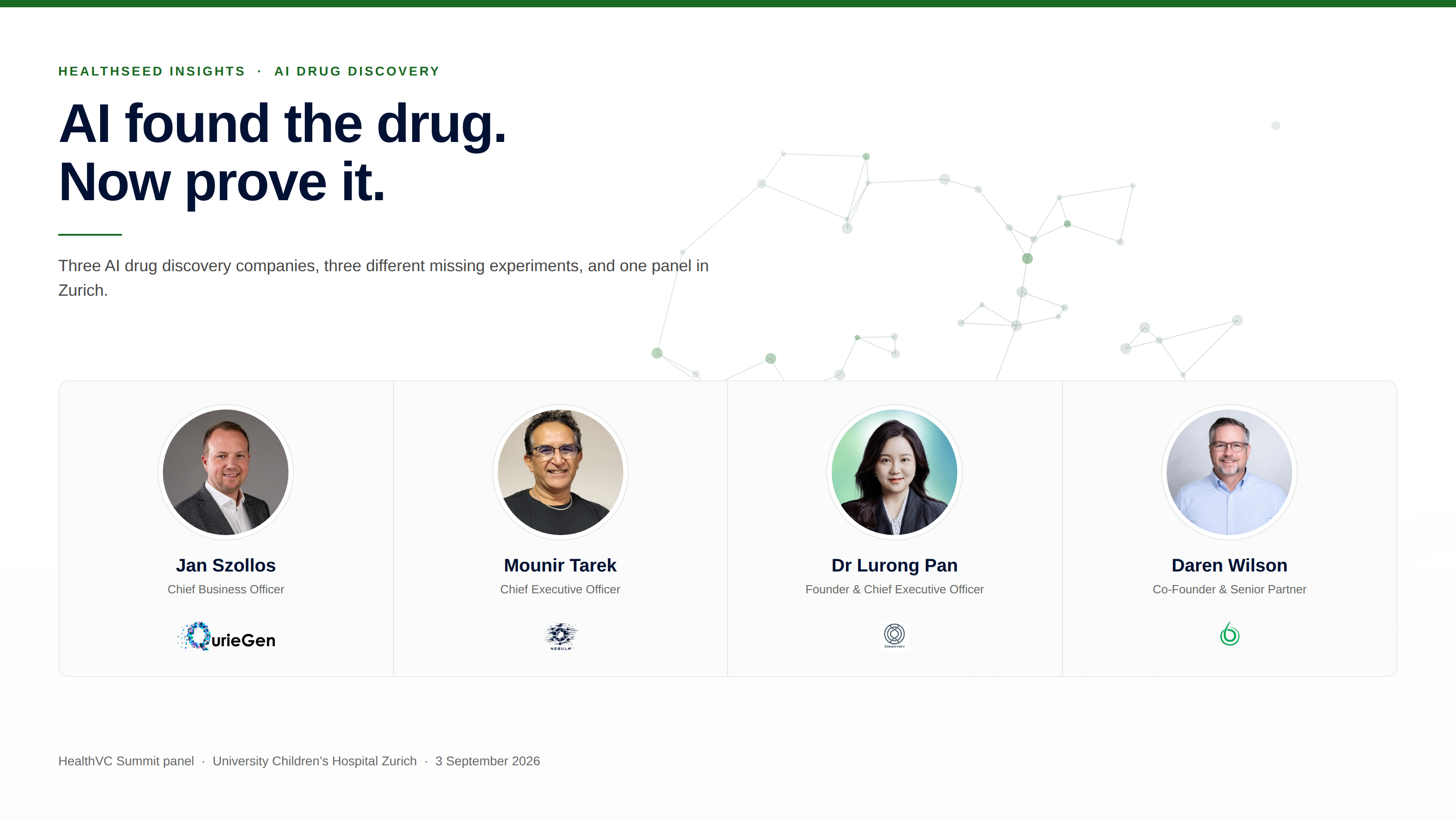
HealthSeed AG took part in a panel discussion on AI drug discovery at the HealthVC Summit in September, alongside a promising selection of AI drug discovery companies: QurieGen, NEBULA, and Ainnocence. This article builds on that discussion to cover what AI has already delivered in drug discovery, where the harder steps still sit, what investors and pharma need to see before capital and partnerships move, where durable value is likely to settle between biotech and pharma, and what each company expects to have delivered by 2031.

I. What AI drug discovery has already delivered
In October 2024 the Nobel committee gave two prizes to the science behind AI drug discovery. The physics prize went to the foundations of neural networks. The chemistry prize went to predicting the three-dimensional shape of a protein from its sequence, a problem biology had not solved in fifty years. Shape matters because a drug works by fitting into a protein the way a key fits a lock, and until 2021 finding that shape meant years of laboratory crystallography for a single protein.
Investment followed the science. Isomorphic Labs raised USD 2.1 billion in a single round in May 2026, and Chai Discovery raised USD 400 million, both to build software that finds and designs drug candidates. More than 170 candidates found with the help of AI are now being tested in patients.
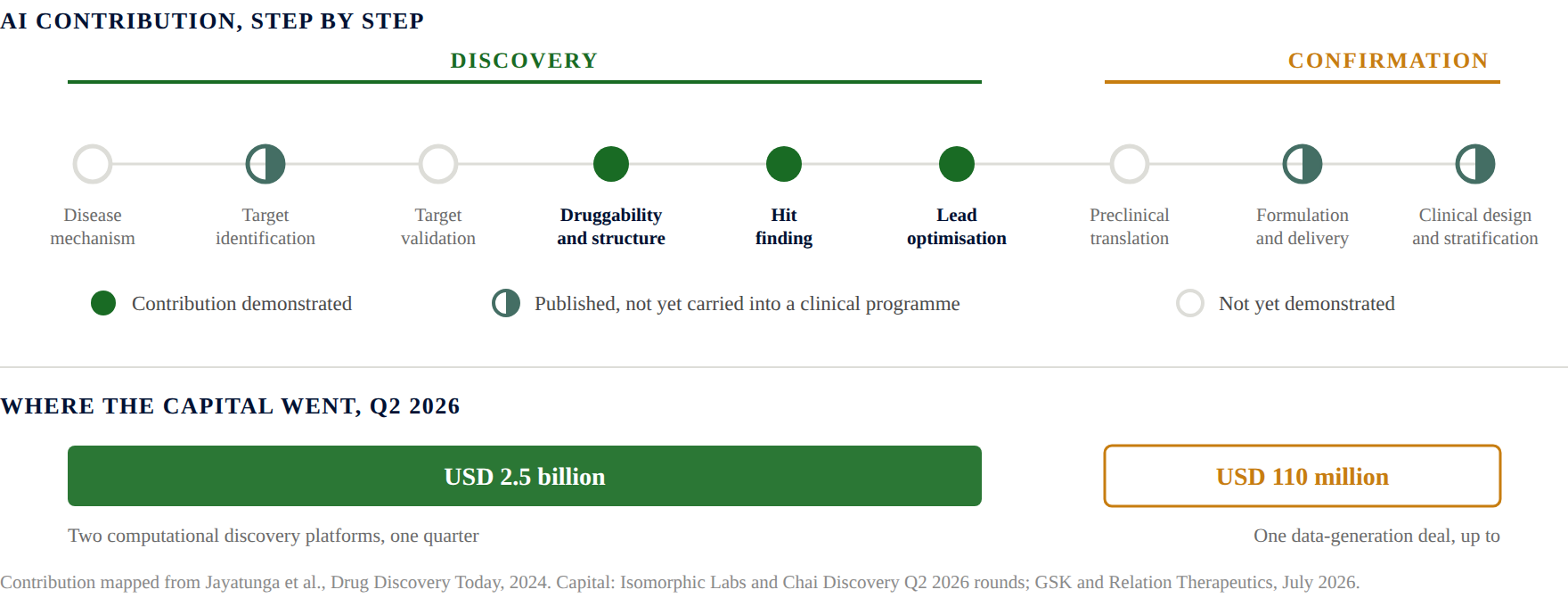
None of them has been approved, and that fact is the one most often used to argue the field has not delivered. It is the wrong test to apply in 2026. A drug that entered its first human trial in 2023 is three years into a process that runs eight to twelve years for every medicine, whichever way the molecule was found. The earliest AI-discovered candidates have not yet reached the point where an approval decision is even possible.
The question that can be answered today is narrower. Which parts of making a medicine has AI made faster, and which parts has it left exactly as they were?
AI has compressed the front end. Choosing which protein to target, and designing a molecule that binds it, now takes months where it took years, and drug discovery pipelines at pharma and biotech companies have roughly doubled in size as a result. Everything after that has stayed where it was. Validation means proving, first in the laboratory, then in animals, then in patients, that the chosen protein really drives the disease, that the drug reaches the tissue where it has to act, and that patients measurably improve. Cell cultures grow at their own speed, animal studies run for months, and clinical trials run for years. No amount of computing power shortens any of it.
Each of the three companies on the panel contributes one or more capabilities to creating a medicine. Thousands of different processes are required to make a medicine, which is why partnering and collaboration are becoming more common in drug discovery. QurieGen measures what a drug does inside a cell, NEBULA finds binding sites on proteins nobody could drug, and Ainnocence designs the molecule itself. We give more detail on each company in Section II.
Five years from now, we will be focusing on how to tailor drug discovery to the patient, and how AI can help find the right combination of treatments for each patient. Getting there means funding validation at the same scale as discovery.
One project shows what the discovery half can now do. Roche and Recursion set out to find which genes drive neurodegeneration. They grew more than ten billion neurons in the laboratory, switched genes off across them one by one, photographed what happened to each cell, and used machine learning to read the results. Nobody decided in advance which genes were worth looking at. A research team testing one hypothesis at a time would need decades to cover the same ground, and would only ever test the hypotheses somebody had thought of.
The result shows up in the pipelines. Beyond the doubling in size, patient populations that were never economically viable to research are now reachable, because the cost of producing a credible starting molecule has fallen far enough to justify programmes that would previously have been dropped. That is a real gain and it belongs to AI drug discovery.
The clearest evidence that discovery is working came two months before the panel. Insilico Medicine used its own software to pick a target, a protein called TNIK that nobody had run a fibrosis programme against, and a second piece of software to design a molecule that binds it. The result, rentosertib, was tested against placebo in seventy-one patients with idiopathic pulmonary fibrosis, a disease that stiffens the lungs and has no cure. Over twelve weeks, patients on the drug gained 98.4 mL of lung capacity on average while patients on placebo lost 20.3 mL. Blood markers moved in the direction the mechanism predicts. The trial was published in Nature Medicine in June 2025 and a Phase III began in July 2026. We looked at what that readout does and does not settle in An AI-designed drug reached Phase III. The evidence bar did not move.
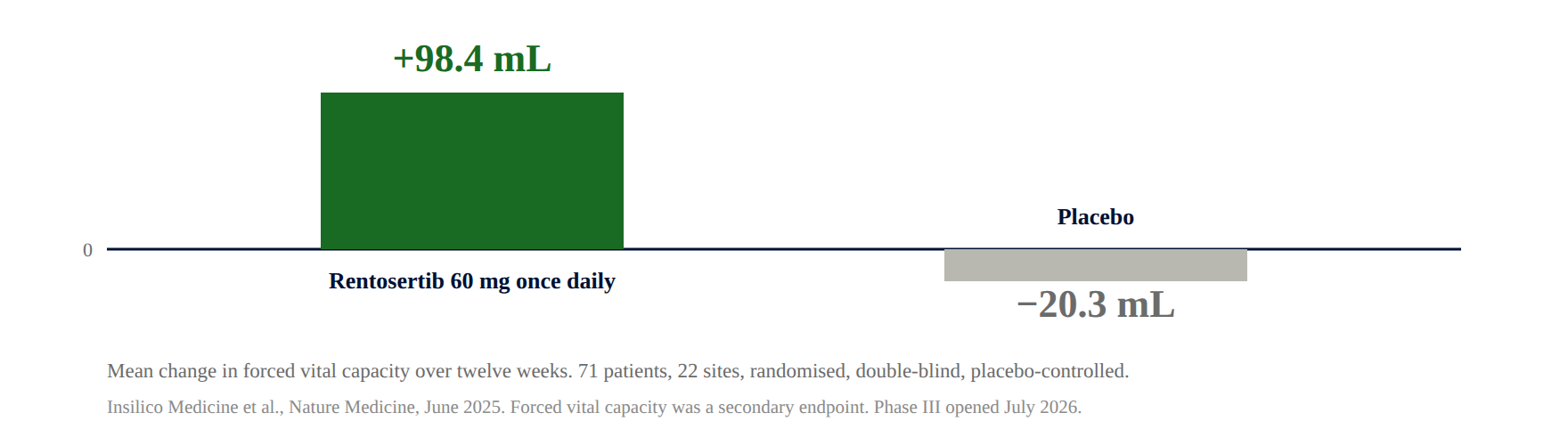
Software chose the target, software designed the compound, and patients improved. That is the strongest result AI drug discovery has produced. It is also a single programme in seventy-one patients over twelve weeks, with lung capacity measured as a secondary endpoint and a Phase III that has not reported. Anyone who has run a development programme knows how far that is from an approved medicine. The useful question is what would have to change for the next twenty programmes to look like this one.
II. Three companies, three different missing experiments
Making a medicine runs in a fixed order. First, work out which protein in the body is actually causing the disease. Second, establish whether that protein has a pocket a drug can bind to at all. Third, design a molecule that binds it without also binding a hundred other things. Fourth, show in patients that the result helps.
Three companies presented at the HealthVC Summit, each built against one of the first three steps, and each arguing that a different experiment has not been run. What made the session worth writing up is how precisely their positions fit together.
NEBULA, at the target
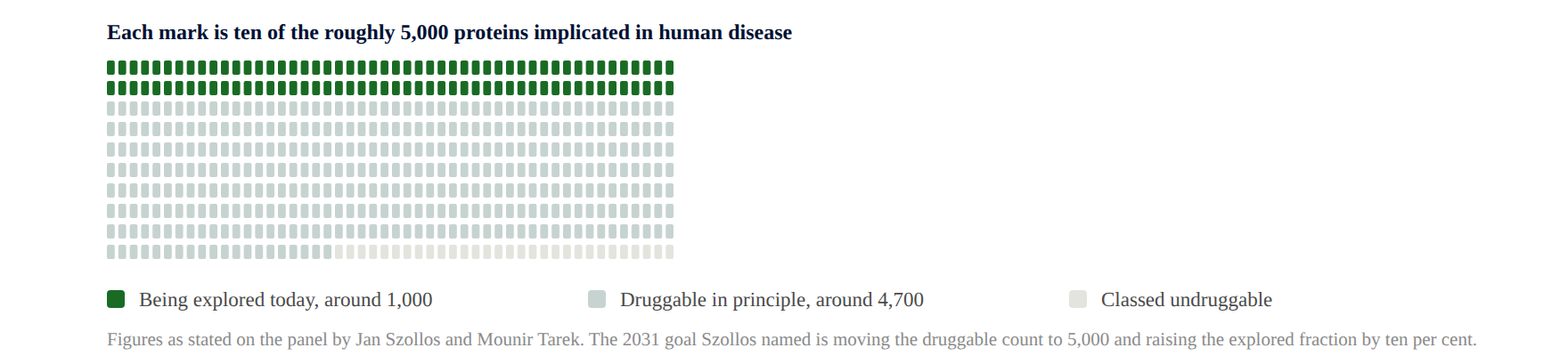
Roughly 5,000 proteins are implicated in human disease and around twenty per cent of them can be drugged. The rest carry no visible pocket in the structure a crystallographer solved, so nobody has anywhere to start.
A protein showing no pocket in a static structure may open one for a few billionths of a second as it moves. NEBULA, which Tarek founded at the end of 2024 out of twenty-five years of simulation work at the CNRS, models that movement atom by atom, detects the openings, and measures how long each one stays open before deciding whether chemistry could use it. Pockets with very short lifetimes get discarded.
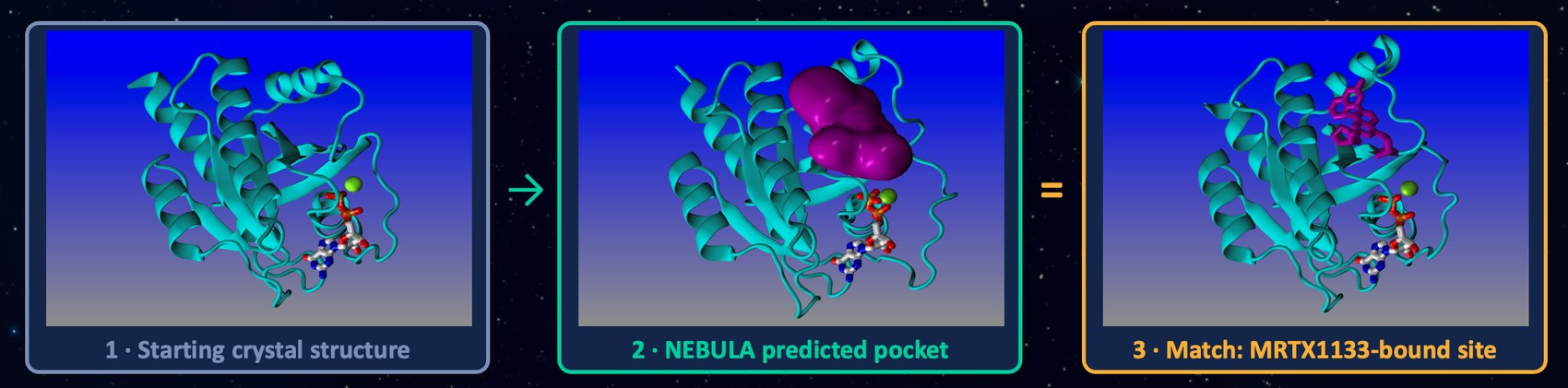
Their proof point is KRAS, mutated in around twenty-five per cent of cancers and treated as undruggable for forty years. Tarek’s team gave the algorithm one input, the deposited crystal structure of the protein as it was before any inhibitor existed, and nothing else. It recovered the site where marketed drugs now bind.
He was equally direct about the trade-off, which is the kind of thing a company rarely volunteers in front of investors.
He also named where his output goes next, unprompted. A novel pocket is an input to a molecule design engine, and he pointed at Ainnocence when he said so.
Ainnocence, at the molecule
Lurong Pan trained as a computational chemist in physics-based methods, hit the same obstacle Tarek describes, and took a different route around it.
The company predicts binders of different modalities against any target from sequence alone, with no structure required. Pan’s argument for why this matters is about failure modes rather than speed.
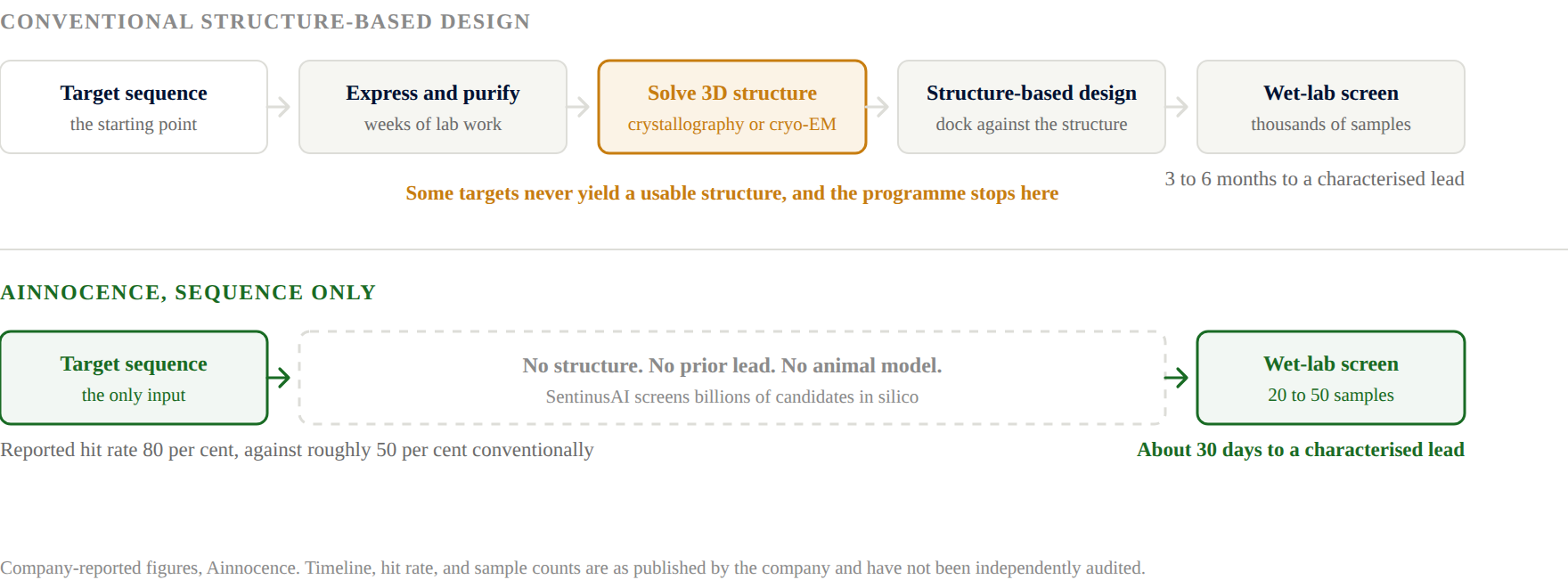
Ainnocence runs multi-objective optimisation, scoring every generated molecule across toxicology, ADME, and other physiological outcomes at the same time. The company reports more than a hundred projects in three years, hit rates of ten to sixty per cent in primary screens, around ninety per cent of optimisation projects delivering a preclinical endpoint, and over half of those on targets that were completely novel. It also reports a client molecule now in Phase I. These are company figures and none has been independently audited, which Pan did not dispute.
On the technical claim she was specific. The company’s AINN-P1 model carries 167 million parameters and reports the leading stability score on the public ProteinGym benchmark at a Spearman correlation of 0.625, ahead of a 100 billion parameter competitor, and generalises to unseen antibody programmes with an AUC 0.15 higher than a 650 million parameter model roughly four times its size. The work is a preprint and has not yet been through peer review. Publishing the benchmark protocol would let the rest of AI drug discovery check it.
QurieGen, at the biology
QurieGen is a Radboud University spin-off from Professor Wilhelm Huck’s single-cell lab, and Szollos placed the company deliberately downstream of the other two.
The platform runs perturbation experiments on selected cells and reads the full transcriptome alongside up to 500 membrane and intracellular proteins and phosphoproteins from the same cell, then trains causal models on the result to generate hypotheses about novel targets.
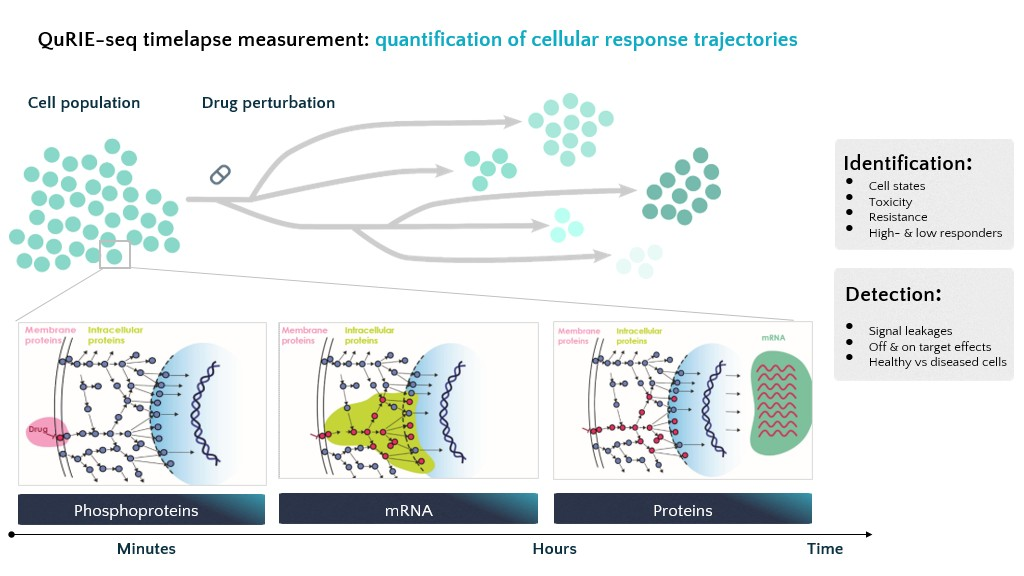
Szollos put the same number on the problem that Tarek did, from the other direction. Around 4,700 proteins are druggable in principle and roughly twenty per cent of that space is being explored. He also said plainly what he has not yet seen.
How the three fit together
Their capabilities also run in order. QurieGen’s biological measurement tells you which protein is worth attacking. NEBULA’s conformational modelling tells you whether that protein can be drugged. Ainnocence’s sequence-based design produces the molecule once a pocket exists with no chemistry behind it. Tarek said as much himself on the panel when he named Ainnocence as where his output goes next. Working the other way, spending simulation time on a protein whose role in the disease is unproven is an expensive way to end up with a compound nobody can develop.
None of the three claims to deliver a medicine on its own.
  QurieGen QurieGenJan Szollos, Chief Business Officer |  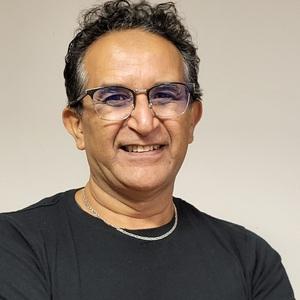 NEBULA NEBULAMounir Tarek, Chief Executive Officer |  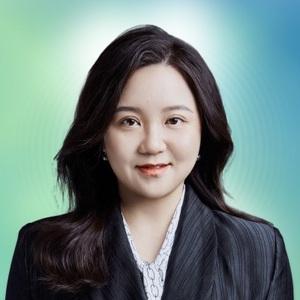 Ainnocence AinnocenceDr Lurong Pan, Founder and Chief Executive Officer | |
|---|---|---|---|
| Their approach | Run biologically relevant perturbation experiments in a systematic way to reveal causal relationships in cells | Use physics to find binding sites on proteins nobody could drug | Design the molecule from sequence alone, no structure required |
| What they have shown | QuRIE-seq uncovered previously unrecognised cross-talk between BCR and JAK/STAT signalling, revealing JAK1 as an active component of the BCR response | KRAS G12D, binding site recovered from a structure predating any inhibitor | 100+ projects, 10–60% primary hit rate, one client molecule reported in Phase I |
| Evidence level | Peer-reviewed publications and three industry collaborations | Retrospective | Preprint |
| In their own words | “We need to return to the physical world, run the right experiments, generate the right data, and use that data to deconstruct the deeper layers of human biology before training causal virtual cell models.” | “No flywheel. We start again for every target” | “We cannot do that alone” |
| What would strengthen the case | Uncover and publish previously unseen causal biological mechanisms that can be explored in a therapeutic context | A preregistered prospective run | Benchmark protocol in the open |

III. What investors and pharma need to see
The second half of the session turned to evidence, and the bar has moved a long way in five years.
Around four hundred AI drug discovery tools are published free on GitHub. Anyone with the coding skills could assemble a discovery platform from them this year, which means owning software is no longer what makes a company worth backing. Three other things do.
The first is a method nobody else has. Ainnocence works from the amino-acid sequence of a protein and never builds its three-dimensional structure, which is a different way of solving the problem and not a better-tuned version of what everyone else does.
Validated benchmarks come second. Pharma and biotech partners are not there to buy the hype. They are there to buy the evidence, which means published methods, published protocols, and results somebody outside the company can reproduce. Every company on that panel has at least one headline number that currently rests on its own reporting, and each of them would be stronger with the protocol in the open.
Third, and this is the one that has changed most in five years, computational-only is no longer a position. Novelty carried it a few years ago and novelty wears off. Building an AI drug discovery company now means bringing in the wet lab and the validation, and thinking from the bench through preclinical to Phase I and beyond.
Tarek’s response to the same question is the most useful answer a founder can give.
Szollos named the deal he thinks sets the pattern. In January 2026 GSK licensed Noetik’s OCTO-VC virtual cell foundation models for non-small cell lung and colorectal cancer, a five-year agreement worth USD 50 million in upfront and near-term payments plus an annual subscription fee. GSK bought access to a model, not a molecule.
That structure matters because of what it puts a price on. Trained models are becoming easy to obtain. Experimental results from human tissue are not, and a pharma company sitting on decades of its own laboratory data holds something no amount of computing can generate.
IV. Where durable value sits
Will pharma simply build all of this in house? The last two times the industry asked that question it got the same answer.
When high-throughput screening arrived, the assumption was that every large pharma would absorb it and the specialist companies would disappear. They did not disappear. When the genome was mapped, the assumption was that pharma would take genome mapping in house. Many specialists are still out there providing that service, and the same shape is likely here.
Some AI drug discovery companies will sell a service to everyone, which is a durable business and keeps pharma and biotech supplied with capability they do not want to build. Others will hold their method to themselves and develop their own drugs. Both models work, and companies get into trouble when they pitch one and are built for the other.
Pharma will in-house what falls inside its strategic interest, which historically means the data and the clinical pathway, and it is now buying compute on the same logic. Roche has taken on more than 3,500 Nvidia chips to build that capacity.
He also made a point about access that deserves more attention than it got in the room. AI is democratising drug discovery. Thirteen years ago pharma held a near-monopoly on it, employing thousands of chemists to fill pipelines. That work moved to biotech, and the tools are now good enough that individual scientists with strong computational skills and enough structural biology to know what they are looking at can do it. Useful molecules will start coming from labs and individuals nobody is currently watching.
The capital implication follows from the same reasoning. Discovery has been well funded. Isomorphic Labs raised USD 2.1 billion in May 2026, around thirty-seven per cent of all digital health funding in the quarter, with Chai Discovery second at USD 400 million. Both are strong companies doing serious science on structure and design.
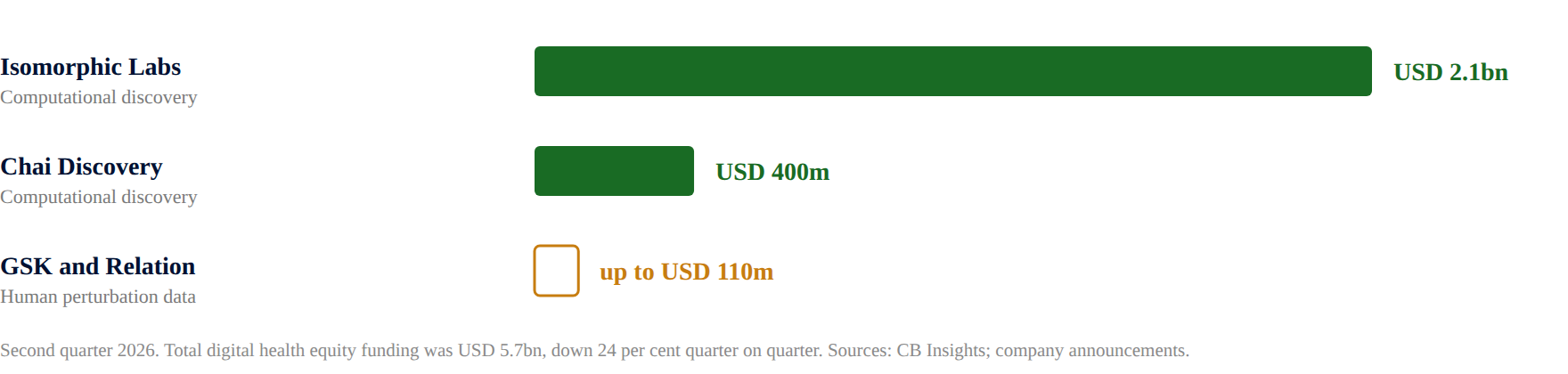
Validation has not been funded at that scale. Wet-lab capacity, getting a drug to the right tissue, and trial design that can detect an effect in the patients most likely to show it are where the returns now sit. The Noetik licence Szollos described, and GSK’s expanded collaboration with Relation Therapeutics in July 2026 worth up to USD 110 million for time-resolved human perturbation data, are early examples of capital finding that layer.
The strongest structural point from the panel is the one every speaker arrived at independently. Nobody can do this alone. Making a medicine is extraordinarily complex, and it now requires several different technologies, several companies, and pharma and biotech working together across each stage. Business partnering is going to get bigger, and the companies that know which part of drug R&D they own will be the ones that partner well. We set out how those deals are actually structured in AI Drug Discovery: What’s the Deal?
V. What has to be true by 2031
Each panellist was asked what their company would have delivered in five years, and the answers were unusually concrete.
Szollos wants one number to move. Of the roughly 4,700 druggable proteins, around twenty per cent are being explored. Moving the druggable count from 4,700 to 5,000, and raising the explored fraction by ten per cent, would create medicines for millions of people who have none.
Pan framed hers around unmet need. Around fifteen thousand diseases have no standard treatment. Four per cent of the world’s population has a rare disease, most of them genetic, most requiring intervention in early childhood. Further pandemics will come and will need a fast response. She believes molecule generation for validated targets is close to a solved problem computationally, and that the constraint is the efficiency of the lab and the clinical trial.
Tarek was blunt about what he needs and what he offers.
That is an open invitation to a pharma partner, made in public, and invitations like it usually go unanswered.
My own answer was about where the attention goes. Five years from now, we will be focusing on how to tailor drug discovery to the patient, and how AI can help find the right combination of treatments for each patient.
Getting there means building out validation, the slower half of drug R&D, with the same seriousness the discovery half received. QurieGen, NEBULA, and Ainnocence each named a piece of what is missing. Whether the capital, the wet-lab capacity, and the partnerships arrive fast enough is what decides how quickly any of it reaches a patient.
The three companies
Each company has reviewed and approved its own entry.
About the author
Sources
Sources Panel: “AI Found the Drug. Now Prove It.” HealthVC Summit, University Children’s Hospital Zurich, 3 September 2026. Panellists Mounir Tarek (NEBULA), Dr Lurong Pan (Ainnocence), Jan Szollos (QurieGen), and Daren Wilson (HealthSeed AG). Insilico Medicine et al. A generative AI-discovered TNIK inhibitor for idiopathic pulmonary fibrosis: a randomised phase 2a trial. Nature Medicine , 3 June 2025. Phase III initiation announcement, 7 July 2026. CB Insights, State of Digital Health Q2 2026. Isomorphic Labs Series B, 12 May 2026. Chai Discovery Series C, 2026. GSK and Noetik, OCTO-VC foundation model licence, 8 January 2026. Relation Therapeutics and GSK, 30 July 2026. Jayatunga MKP, Ayers M, Bruens L, Jayanth D, Meier C. How successful are AI-discovered drugs in clinical trials? Drug Discovery Today 29(6), 104009, 2024. Wang R, Jin K, and Pan L, AINN-P1 protein foundation model, preprint 2026, not peer reviewed. Company figures for NEBULA, Ainnocence, and QurieGen are as stated by each company on the panel and identified as such in the text.