
Health Innovation Hubs: From National Health Strategy to Health Economy
Every country in the Middle East and North Africa has already set its health targets. Health innovation hubs are the operating model that turns those targets into solutions patients receive, and into companies whose returns compound across the economy.


The targets are already set
Health policy in the region has moved from aspiration to measurable commitment. Governments now publish outcome targets with dates attached, and they use those targets to set spending and workforce priorities.
| Country | Stated ambition | Source |
|---|---|---|
| Saudi Arabia | Life expectancy of 80 by 2030, reported at 79.7 in 2025; biotechnology leadership in the region by 2030 and a global hub by 2040 | Vision 2030 Health Sector Transformation Program; National Biotechnology Strategy, 2024 |
| United Arab Emirates | Among the world's top 15 health systems for quality of care by 2031 | We the UAE 2031 |
| Qatar | Life expectancy of 82.6 and a 36% reduction in deaths from noncommunicable disease by 2030 | National Health Strategy 2024–2030 |
| Tunisia | A one-third reduction in premature deaths from chronic disease by 2030, with universal health coverage as the goal of its first National Health Policy | UN SDG target 3.4; National Health Policy 2030, adopted 2021 |
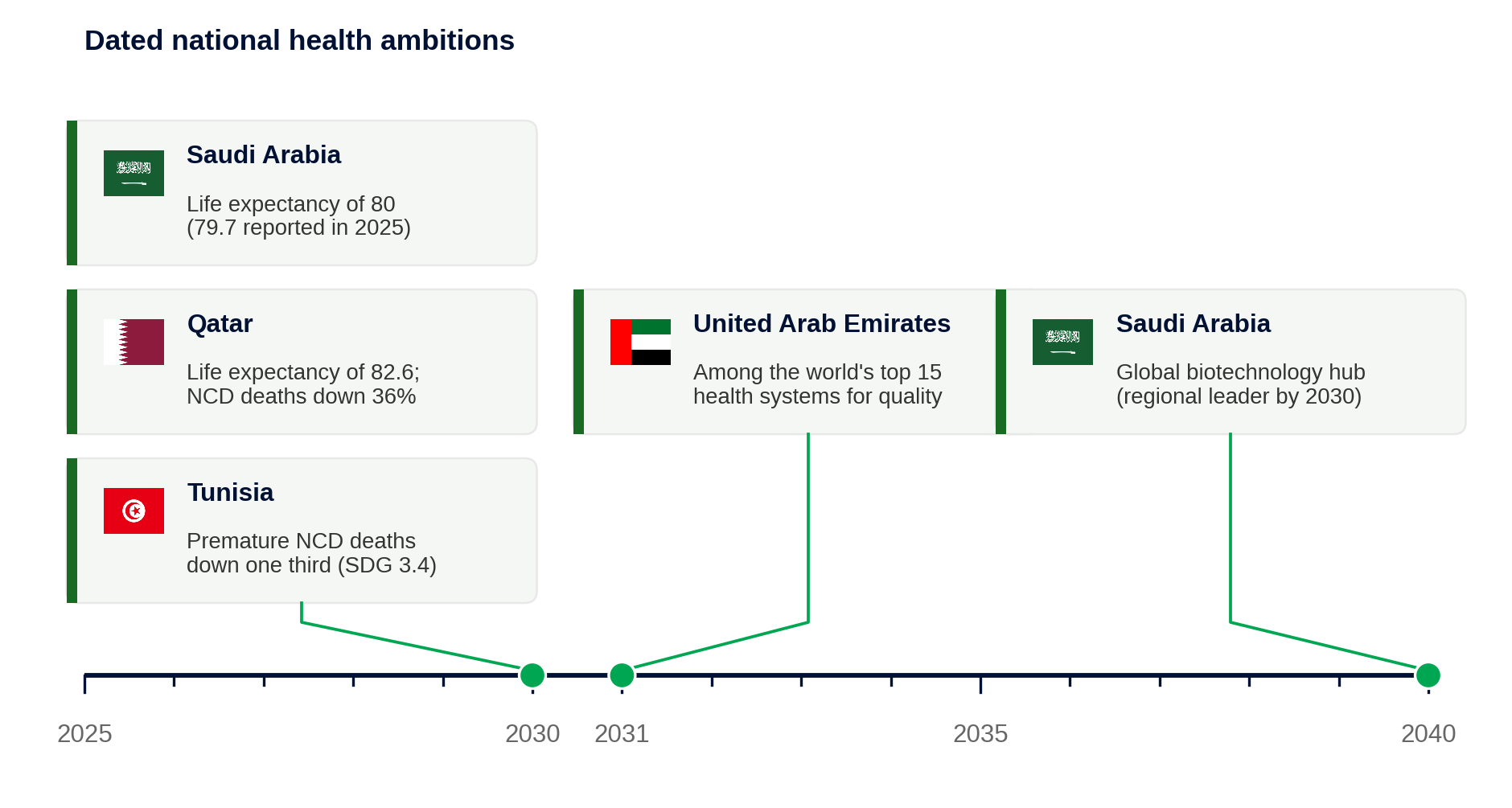
Projected ten years forward, those commitments describe a region that leads on prevention and early diagnosis, runs health economies that generate value as well as consume it, and is recognised as a source of health innovation for the world. What most systems still lack is the operating model that connects a national target to the hospital ward and to the companies that can scale a solution, and health innovation hubs are that model.
Four pressures every health system shares
The case for hubs starts with pressures that no hospital or ministry can resolve on its own.
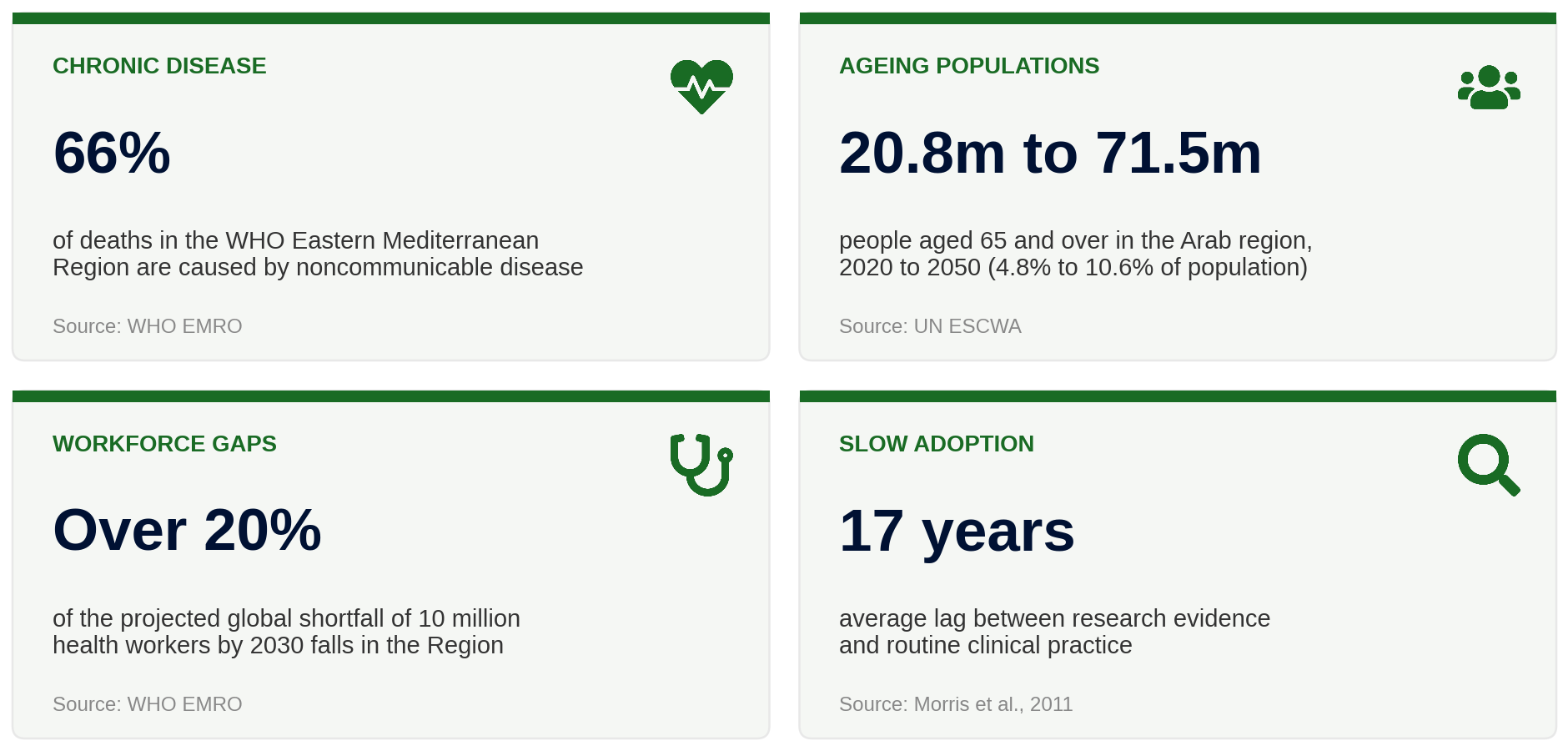
Chronic disease. Noncommunicable diseases now cause 66% of deaths in the WHO Eastern Mediterranean Region. Diabetes alone affects around 85 million adults in the Region, an adult prevalence of 17.6%, and nearly one in three of them have not been diagnosed. In the IDF Middle East and North Africa region the number of adults living with diabetes rose from 17.0 million in 2000 to 84.7 million in 2024, with 162.6 million projected for 2050.
Ageing populations. The number of people aged 65 and over in the Arab region is projected to rise from 20.8 million in 2020 to 71.5 million by 2050, lifting their share of the population from 4.8% to 10.6%. Older populations live with more long-term conditions and need care that is coordinated over time and delivered closer to home.
Workforce gaps. WHO projects a global shortfall of 10 million health workers by 2030, and the Eastern Mediterranean Region accounts for more than 20% of it. Every solution that extends what a clinician can do, by automating a screening step or monitoring a patient remotely, adds capacity a recruitment drive cannot.
Slow adoption. An often-cited review puts the average lag between research evidence and routine clinical practice at seventeen years. The lag varies by field, and the cause is consistent: new solutions struggle to find a route into established hospital systems and their procurement and clinical workflows.
The response WHO member states endorsed in 2016 is to organise health services around people, through the Framework on integrated, people-centred health services. A health innovation hub is one of the most direct ways to put that framework into practice, because it starts from the patient journey and works back to the technology.
What is a health innovation hub?
A health innovation hub is a public-private partnership, anchored in a hospital, that turns clinical challenges named by clinicians into solutions developed with companies and researchers and then brought to market. It is defined by how it works, and a building or a science park is only one possible expression of it.
- The hospital names the problem: clinical challenges come from real patients and real care pathways, so solutions are designed for adoption from the start.
- Partners co-develop under agreed rules: companies, researchers, and clinicians work together under intellectual property and compensation terms set before development begins.
- Solutions are validated in routine care: evidence is generated where the solution will be used, which shortens the path from pilot to purchase.
- The best solutions become companies: successful projects are commercialised, serve patients at home, and export, returning value to the hospital and the wider economy.
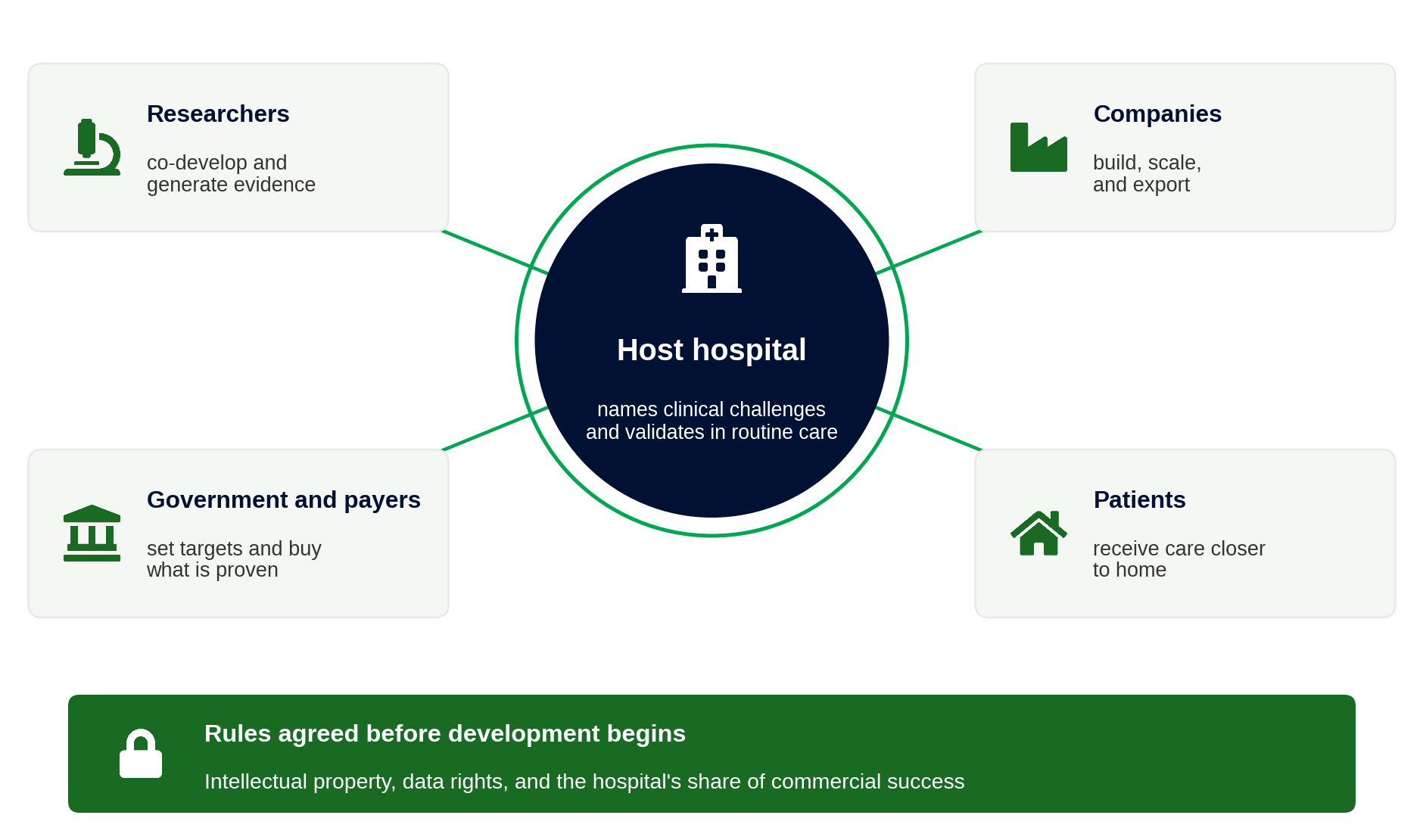
Helsinki: the hospital-led model. CleverHealth Network was founded by HUS Helsinki University Hospital in 2017. Around twenty industry partners work with the hospital on shared clinical challenges, and the network has run nine co-development projects. In its home dialysis project, moving 20 additional patients to dialysis at home saved the hospital EUR 476,200 a year, and the solution was commercialised with Fujitsu. The hospital is entitled to compensation when a jointly developed solution is sold to third parties, a rule agreed at the outset that keeps clinicians engaged and gives the public system a share of the upside.
Switzerland: a light, catalytic public role. Switzerland Innovation runs a national network of innovation parks, with six main sites and affiliated locations. The Confederation provides federally owned land with building rights and guarantees for special-purpose loans, while cantons and private investors fund the sites. sitem-insel, founded in 2014 beside Inselspital in Bern, received CHF 25 million each from the Confederation and the Canton of Bern for 2017 to 2020. The Swiss Federal Audit Office found that only around CHF 5 million of a CHF 350 million guarantee credit had been committed, which suggests the guarantee works mainly as a signal of public commitment, with private capital doing most of the building.
The region: hospitals that name their needs. Early versions of the model already exist in the region. In June 2024 Sidra Medicine and Qatar's Research, Development and Innovation Council opened a call for less invasive newborn blood sampling to support genome screening. One precise clinical need, stated by the hospital and open to any solver, is the first turn of a hub's flywheel.
Health is wealth
Health spending is usually discussed as a cost. The evidence supports treating it as an investment with a measurable return, and hubs add a second return on top of the health gain.
| Figure | What it shows | Source |
|---|---|---|
| US$50bn a year | Economic cost of noncommunicable disease across the six GCC countries, 3.3% of 2019 GDP; US$20bn of it is lost productivity | UNDP and WHO, January 2024 |
| About US$5 per US$1 | Return over 15 years on proven NCD interventions in the GCC | UNDP and WHO, January 2024 |
| Up to US$7 per US$1 | Return by 2030 on WHO best-buy NCD measures across 76 low and lower-middle income countries | WHO, December 2021 |
| US$2–4 per US$1 | Economic return on investment in health; better health could add US$12 trillion, 8%, to global GDP by 2040 | McKinsey Global Institute, July 2020 |
| 0.3–0.6% of GDP | Annual gain from cutting sick-leave days by 10%, across eight Central and Eastern European economies | PwC Strategy& for EFPIA, June 2021 |
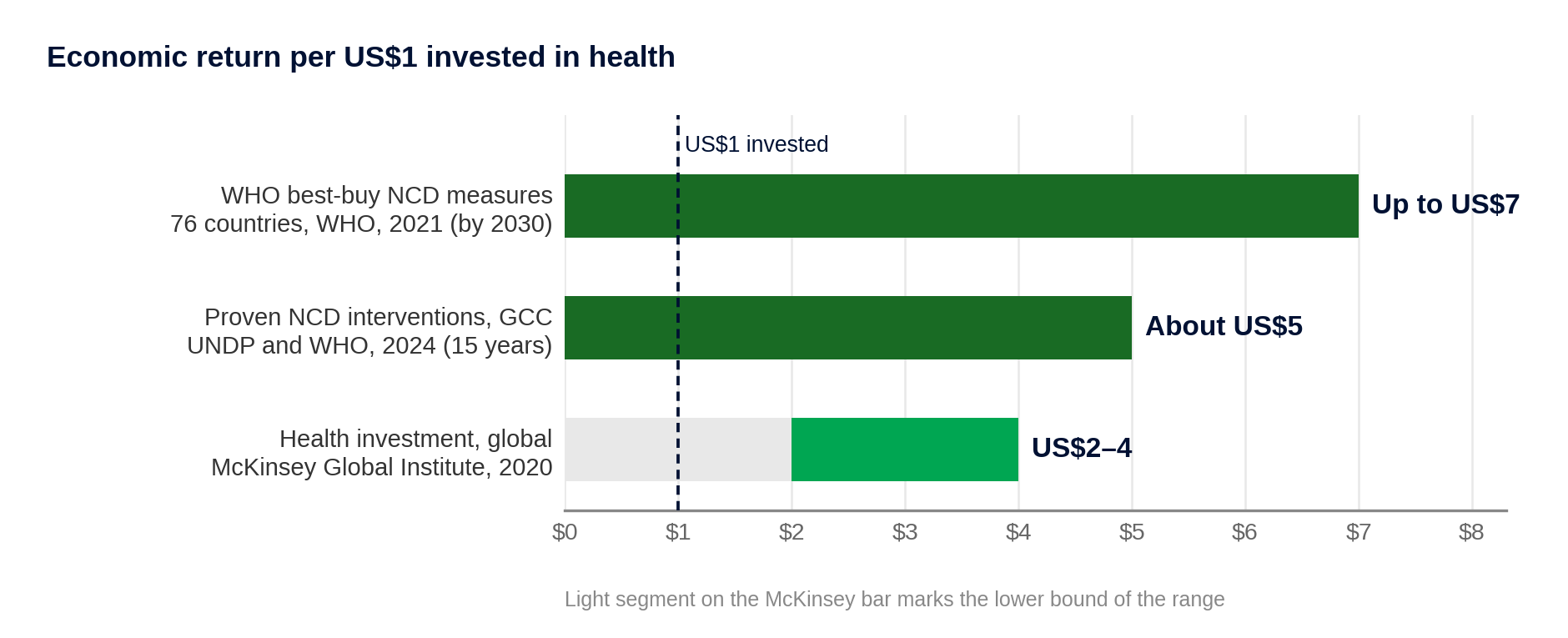
Much of that return comes from people staying in work. Better prevention and earlier diagnosis reduce the days patients lose to illness, and care delivered closer to home reduces the days family members lose to caring for them. In Central and Eastern Europe, cutting sick-leave days by only 10% would add between EUR 159 million and EUR 1.1 billion a year to GDP, depending on the country.
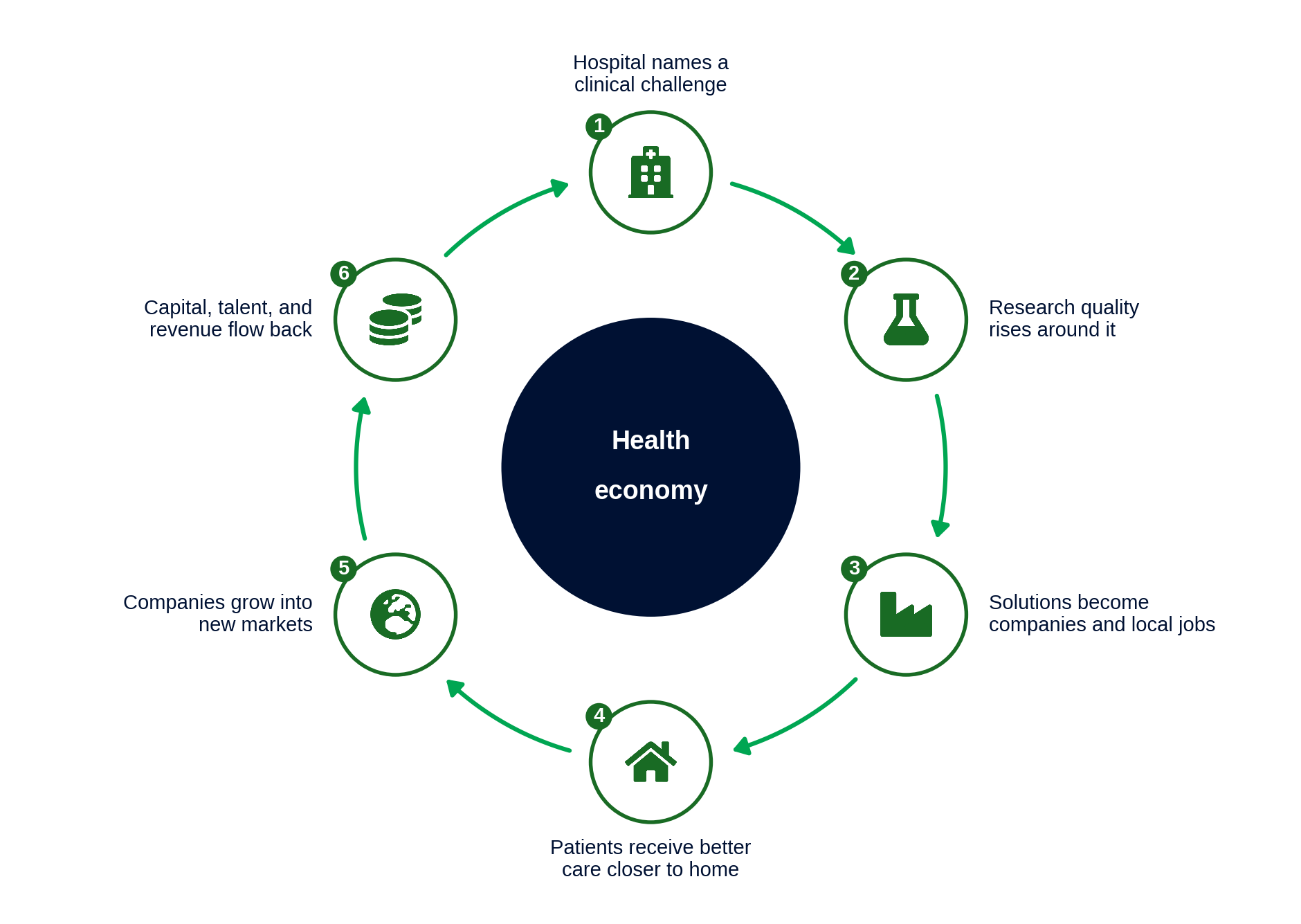
A hub turns this into a flywheel: a hospital names a clinical challenge, research quality rises around it, solutions become companies with local jobs, patients receive better care closer to home, and companies grow into new markets. As they do, capital, talent, and revenue flow back to fund the next round of challenges. The market to grow into is substantial: current health expenditure in the GCC is projected to rise from US$109.1 billion in 2024 to US$159 billion by 2029. Our working hypothesis is that once the first hub companies export, returning capital begins to fund the next round, and the public share of the investment can fall over time.
Where national strategies have paid off
Finland exported EUR 2.58 billion of health technology in 2023, with a trade surplus of EUR 1 billion and a cumulative surplus of around EUR 17 billion over two decades. Official figures exclude software and digital services, which represent roughly a third of the sector's value. In Switzerland, pharmaceuticals accounted for 40.5% of all exports in 2024, worth CHF 114 billion, and the industry supports around 300,800 jobs directly and indirectly.
The United Kingdom shows what research inside hospitals is worth to the health system itself. Each patient recruited to a commercial clinical trial brings NHS providers around £9,200 of income and saves around £5,800 in treatment costs. Every pound of public and charity cancer research returns about 40 pence a year, 10 pence in health gain and 30 pence in wider economic benefit. Hospitals with higher research activity also show lower risk-adjusted mortality.
The talent to build this already exists in the region. InstaDeep, founded in Tunis in 2014 by Tunisian entrepreneurs, was acquired by BioNTech in 2023 for £362 million upfront and up to £562 million in total. A hub is how a country turns that kind of talent towards its own health priorities and keeps more of the value at home.
Why connected hubs are worth more
A national hub solves national problems, and hubs that collaborate across the region can draw on an asset that no single country holds at the same scale.
A reservoir of genetic diversity. The Middle East and North Africa holds one of the world's richest and least characterised reservoirs of human genetic diversity. Genomic science remains heavily skewed: 86% of genomic study participants are of European descent, against 16% of the world's population. The Greater Middle East Variome, which sequenced 1,111 unrelated individuals from 20 countries and territories, found consanguinity rates an order of magnitude above other sampled populations and variation largely absent from existing databases. Close family structures make inherited disease easier to trace to its genetic cause: using the regional reference cut the number of candidate disease-causing variants four- to sevenfold. National programmes are adding to this asset, with 780,000 UAE nationals participating in the Emirati Genome Program and genomics a pillar of Saudi Arabia's biotechnology strategy.

Connected hubs can turn that asset into discovery. A solution validated across the Maghreb, the Mashreq, and the Gulf is one the region's own patients can trust, backed by evidence from a far more diverse population than most trials enrol. Hubs can also pool patients with rare conditions, biobanks, and trial sites, as Europe's 24 Reference Networks already do across 1,606 expert centres in 375 hospitals.
Cooperation with data kept at home. Cross-border collaboration does not require patient data to cross borders. In a federated model each hub keeps its records in a national secure environment, the analysis travels to the data, and only aggregate results return. The European Health Data Space regulation, in force since March 2025, offers a reference for common rules on secondary use. Trust between regulators is growing too: in July 2026 WHO published an interim list of 12 medical device regulators, Swissmedic among them, and regulatory reliance of this kind lets a solution approved in one country reach patients in the next sooner.
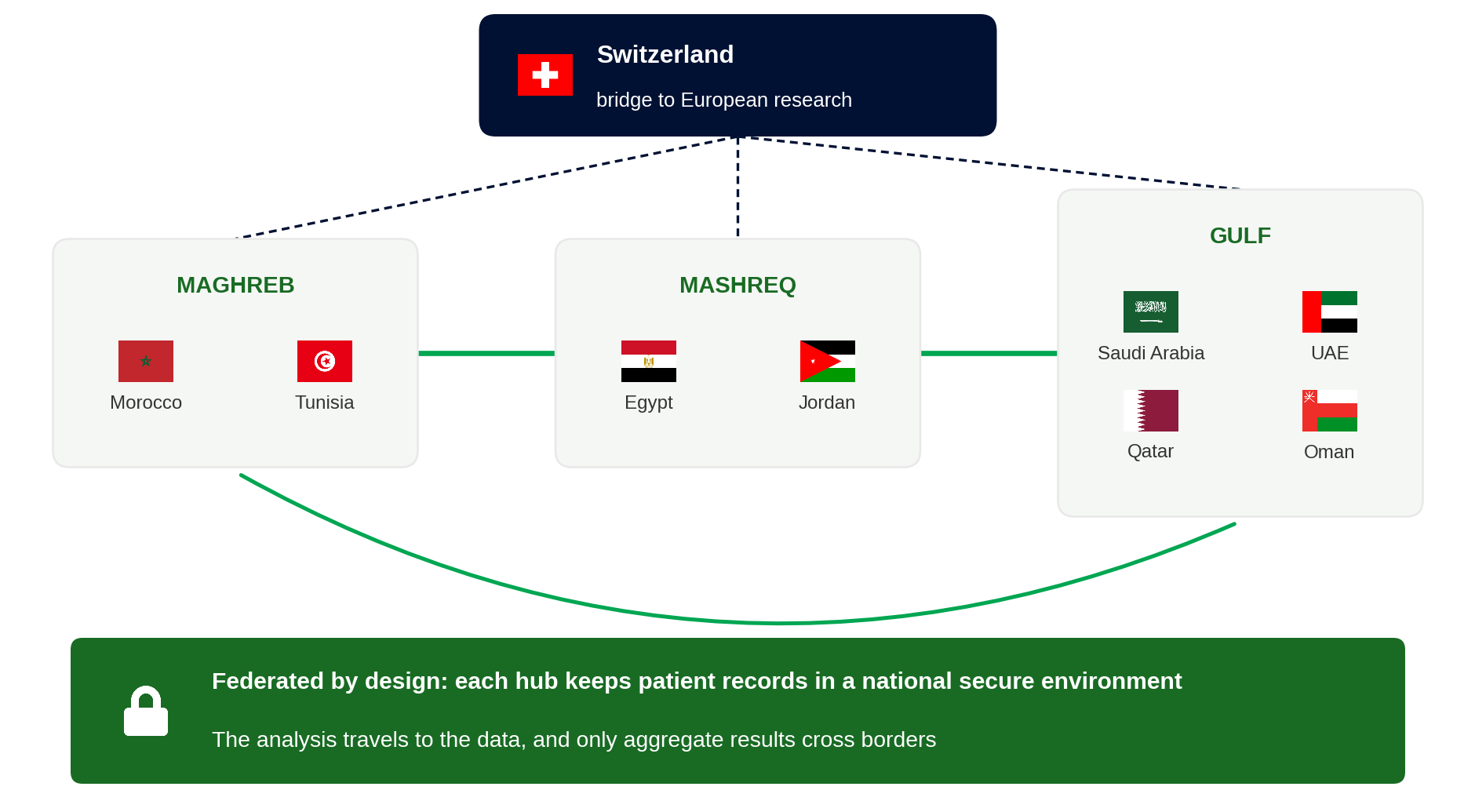
Switzerland, with its innovation parks, a WHO-listed regulator, and renewed full association to Horizon Europe, is a natural partner for regional hubs that want a bridge to European research. Existing regional platforms show that cooperation is already practical: the Gulf Health Council runs joint procurement for its members, and Algeria, Egypt, Morocco, and Tunisia have ratified the African Medicines Agency treaty.
Competing on efficiency
Health innovation is a competitive market, and on research investment the region starts well behind.
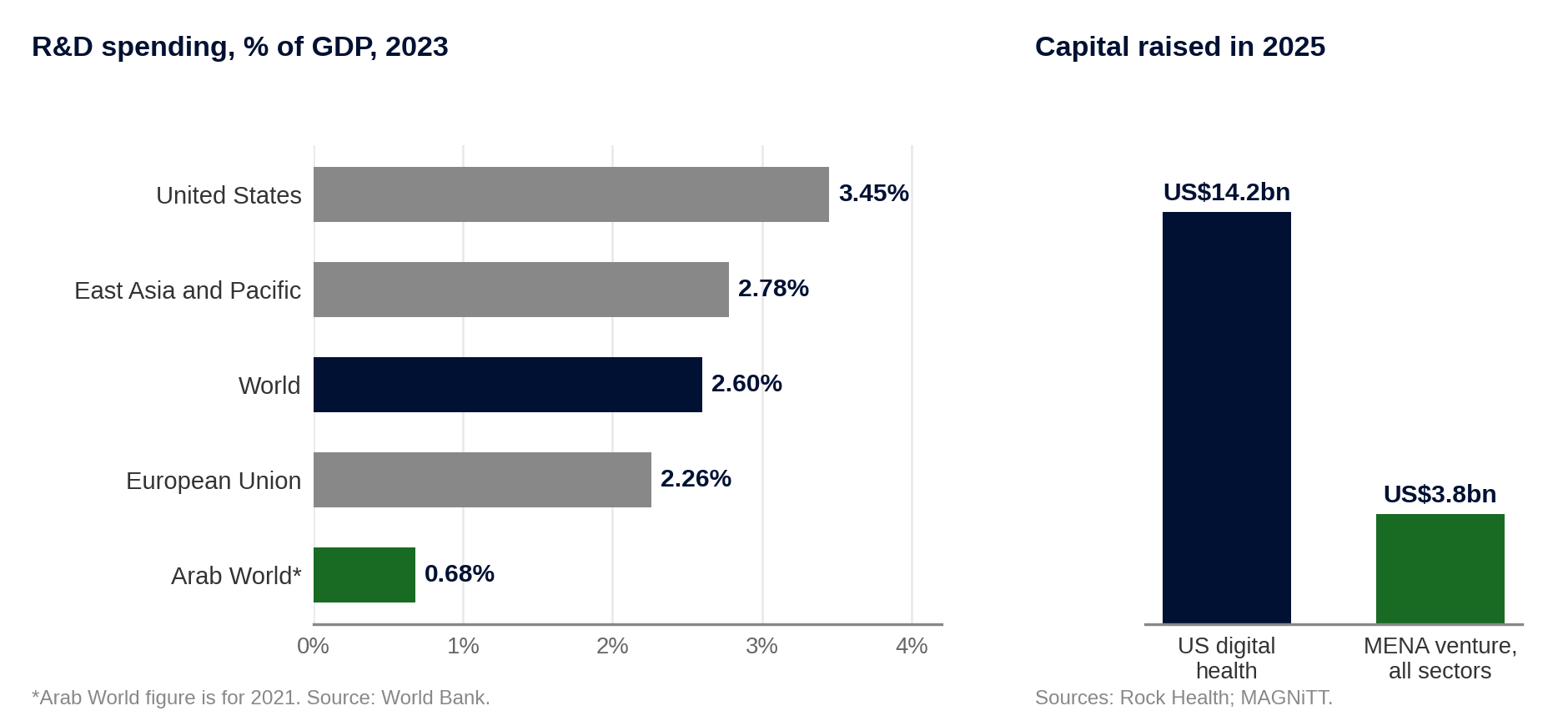
In 2023 the United States invested 3.45% of GDP in research and development, East Asia and the Pacific 2.78%, and the European Union 2.26%, against a world average of 2.60%. The World Bank figure for the Arab World is 0.68%, for 2021.
Venture capital shows a similar gap: US digital health start-ups raised US$14.2 billion in 2025, almost four times the region's total venture funding across every sector, which reached US$3.8 billion after growing 74% in the year.
Research spending is only one measure of competitiveness, and it may not be the decisive one. What decides the outcome is how efficiently capital is deployed to create health innovation with commercial impact. A region that invests less can still lead if every investment targets a named clinical need and is built from the start to reach the market. Hubs can take that opportunity when they measure success in longer and healthier lives, drive care with data generated at home and governed nationally, and are structured to commercialise, so that each investment compounds into the regional health economy.
The timing favours action now, because children and young people up to the age of 24 make up nearly half of the region's population. They will be the region's founders and its patients in 2050, and venture capital is arriving to back them.
Five design choices that decide whether a hub works
Hubs fail for predictable reasons, and in our experience of commercialising health innovation across Europe, the United States, and the region, five design choices separate the hubs that produce companies and outcomes from those that produce pilots.
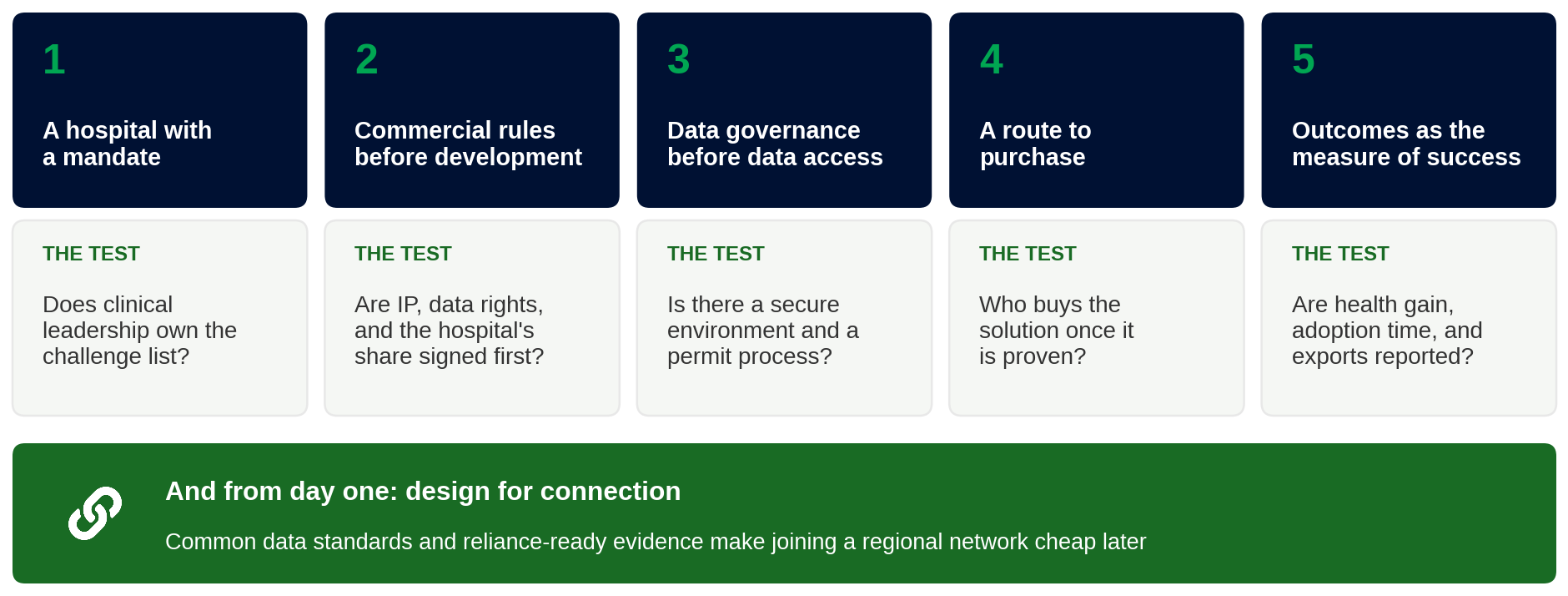
A hospital with a mandate: the hub needs a host hospital whose leadership owns the clinical agenda and whose clinicians have time and incentives to take part. Without clinical ownership, challenges are chosen by suppliers and solutions go unadopted.
Commercial rules before development: intellectual property, data rights, and the hospital's share of commercial success must be agreed before work begins. Helsinki's compensation rule is the model, and renegotiating after success destroys trust.
Data governance before data access: secure environments, permit processes, and common data standards come first. Finland's national permit authority shows the order of work: governance first, then access, with most permits so far going to research.
A route to purchase: a validated solution needs a buyer. Procurement and reimbursement pathways for solutions proven inside the hub are what move a pilot into routine care, and their absence is where hospital pilots commonly stall.
Outcomes as the measure of success: count health gained, time to adoption, companies formed, and exports achieved. Reporting activity alone, in projects or events, lets a hub look busy while the flywheel stays still.
One further choice is easiest to make at the start: design for connection from day one. A hub that adopts common data standards and reliance-ready evidence practices from its first project can join a regional network later at little cost. A hub that does not will find connection expensive.
Conclusion
The countries of the Middle East and North Africa have already done the hardest part of strategy, which is deciding what outcomes they want. Health innovation hubs are how those outcomes are delivered, anchored in hospitals and built in partnership to commercialise what works. Connected across borders, they can turn a shared burden of chronic disease and a unique genetic heritage into a source of discovery for the world. Nearly half of the region is under 25, so the choices made in this decade will shape the health and prosperity of the generation that follows.
About HealthSeed
HealthSeed AG is a Swiss healthcare venture studio and commercialisation partner based in Zürich. It helps health innovators enter and scale in new markets, between Europe and the United States in both directions and across the Middle East and North Africa, builds joint ventures and AI products, and draws on an Expert Community of more than 35 specialists. healthseed.vc
Sources
- 1Saudi Health Sector Transformation Report 2025 (SPA)
- 2Saudi National Biotechnology Strategy (Al Arabiya, January 2024)
- 3UAE top 15 health systems by 2031 (Gulf News, November 2025)
- 4Qatar National Health Strategy 2024–2030
- 5Tunisia National Health Policy (Population Medicine, 2023)
- 6WHO, SDG target 3.4
- 7WHO EMRO, diabetes in the Eastern Mediterranean Region (September 2025)
- 8IDF Diabetes Atlas, Middle East and North Africa
- 9UN ESCWA, Population and Development Report 9 (2022)
- 10WHO EMRO, health workforce (October 2023)
- 11Morris, Wooding and Grant, J R Soc Med (2011)
- 12HUS audit committee memo on company collaboration (January 2025)
- 13SERI, Swiss Innovation Park
- 14Swiss Federal Audit Office, EFK-22435
- 15QRDI Council and Sidra Medicine call (Gulf Times, June 2024)
- 16UNDP, GCC NCD investment cases synthesis (January 2024)
- 17WHO, return on NCD best buys (December 2021)
- 18McKinsey Global Institute, Prioritizing health (July 2020)
- 19PwC Strategy& for EFPIA, Healthcare outcomes and expenditure in CEE (June 2021)
- 20Alpen Capital GCC healthcare forecast (Zawya)
- 21Finnish health technology exports (Helsinki Times, April 2024)
- 22Interpharma, Health Panorama 2025
- 23NIHR and KPMG, clinical research impact (October 2019)
- 24Wellcome, returns on cancer research (June 2014)
- 25Ozdemir et al., PLoS One (2015)
- 26BioNTech to acquire InstaDeep (January 2023)
- 27Fatumo et al., Nature Medicine (2022)
- 28Scott et al., Greater Middle East Variome, Nature Genetics (2016)
- 29M42, Emirati Genome Program
- 30EHDS regulation published (Arnold & Porter, March 2025)
- 31Switzerland associated to Horizon Europe (Euresearch)
- 32World Bank, R&D expenditure (% of GDP)
- 33Rock Health, 2025 year-end digital health funding
- 34MAGNiTT, FY2025 MENA venture report
- 35UNICEF, MENA Generation 2030